
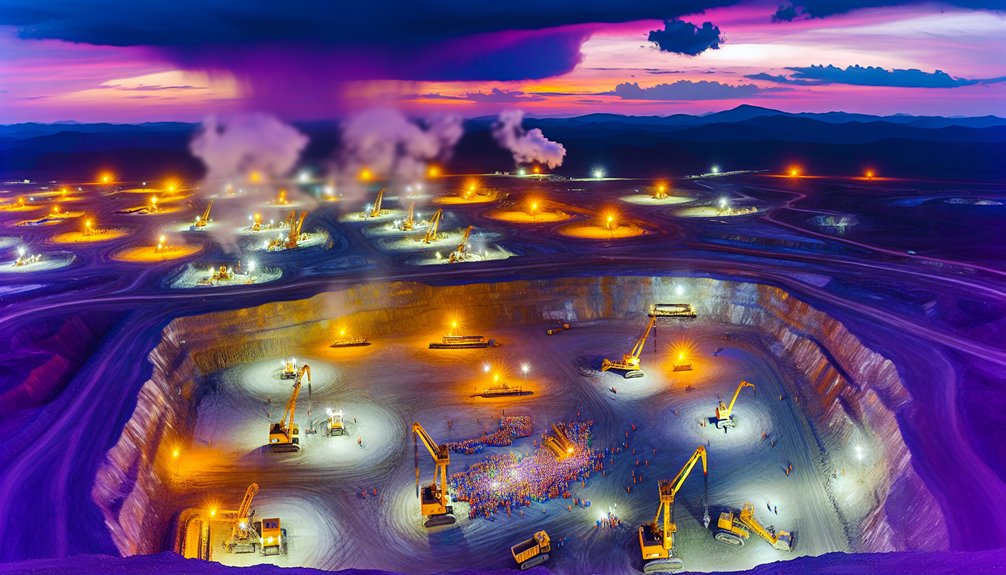

The mining industry is on the brink of major changes that could redefine how operations are conducted. You’ll notice a shift towards automation and sustainability, driven by emerging technologies and regulatory pressures. As companies adapt, the focus on workforce development and safety advancements becomes crucial. What does this mean for the future of mining and its role in a sustainable economy? You might find the answers surprising.
Automation and Robotics in Mining Operations
As the mining industry evolves, you’ll find that automation and robotics are becoming essential for improving efficiency and safety.
These advanced technologies streamline operations, allowing you to reduce human error and minimize risks associated with hazardous environments. Automated drills and autonomous vehicles can complete tasks faster and with greater precision, helping you maximize productivity.
You’ll also notice that real-time data collection from sensors enhances decision-making, enabling you to address potential issues before they escalate.
Sustainable Practices and Environmental Stewardship
With automation and robotics enhancing operational efficiency, the mining industry is now turning its focus to sustainable practices and environmental stewardship.
You’ll notice companies investing in cleaner technologies to minimize their ecological footprint. By implementing renewable energy sources like solar and wind, they’re reducing reliance on fossil fuels.
Additionally, many firms are adopting water recycling systems and waste management strategies to conserve resources and lessen pollution.
You might also see them engaging with local communities to ensure that their operations align with environmental goals.
As regulations tighten and public awareness grows, embracing sustainability isn’t just a choice; it’s a necessity.
The industry’s commitment to responsible practices isn’t only beneficial for the planet but also vital for long-term profitability and social license to operate.
Digital Transformation and Data Analytics
While the mining industry embraces sustainable practices, it’s also undergoing a significant digital transformation powered by data analytics.
You’re likely noticing how companies are leveraging advanced technologies to optimize operations and enhance decision-making. Real-time data collection from sensors and IoT devices helps you monitor equipment health and predict maintenance needs, reducing downtime and costs.
Data analytics also enables you to identify patterns in resource extraction, improving efficiency and minimizing environmental impact. By utilizing machine learning algorithms, you can forecast demand and manage supply chains more effectively.
This shift not only boosts productivity but also aligns with your commitment to sustainability. Embracing these digital tools will be crucial for you to navigate the industry’s evolving landscape while staying competitive.
Regulatory Changes Impacting the Industry
Navigating the mining industry today means staying ahead of rapidly evolving regulatory changes that can significantly impact operations. You need to be aware of new environmental regulations, which often demand stricter compliance to minimize ecological footprints.
Additionally, safety regulations are tightening, requiring you to invest in better training and equipment. These changes can affect everything from operational costs to project timelines.
Furthermore, local and international trade policies can alter market dynamics, influencing your supply chains and profitability. Staying informed and adaptable isn’t just beneficial; it’s essential for maintaining competitiveness.
Engage with industry groups and legal advisors to ensure you understand these changes and can implement necessary adjustments promptly. This proactive approach will help safeguard your business against potential setbacks.
Advancements in Safety Technologies
As you explore the mining industry, you’ll notice how advancements in safety technologies are transforming operations.
Wearable safety devices, autonomous mining equipment, and real-time monitoring systems are leading the charge in protecting workers and enhancing efficiency.
These innovations not only improve safety but also create a more productive work environment.
Wearable Safety Devices
With the rise of advanced technology, wearable safety devices are revolutionizing the mining industry by enhancing worker protection and efficiency.
These devices, like smart helmets and safety vests, monitor vital signs and environmental conditions, ensuring you’re alerted to potential hazards before they become serious threats.
Imagine wearing a device that tracks your location in real-time, allowing supervisors to respond quickly in emergencies.
Features like built-in communication systems enable seamless interaction with your team, fostering a safer work environment.
As you embrace these innovations, you’ll not only improve your safety but also boost productivity.
Autonomous Mining Equipment
While the mining industry adapts to new challenges, autonomous mining equipment is emerging as a game-changer in enhancing safety technologies. These advanced machines minimize human exposure to hazardous conditions by taking on dangerous tasks. They can operate in extreme environments, reducing the risk of accidents and injuries.
With features like obstacle detection and automatic shutdown systems, you can trust that these vehicles prioritize safety. Additionally, autonomous equipment can consistently perform maintenance checks and monitor their own health, ensuring they operate optimally.
Real-time Monitoring Systems
Real-time monitoring systems are revolutionizing safety protocols in the mining industry by providing immediate access to critical data. You can now track environmental conditions, equipment performance, and worker health in real-time, enabling quick decision-making.
These systems utilize advanced sensors and IoT technology to detect potential hazards before they escalate, reducing risks significantly. Imagine receiving alerts on equipment malfunctions or unsafe air quality instantly; it’s a game changer.
By integrating these systems into daily operations, you’re not just enhancing safety but also boosting productivity. You’ll find that real-time data helps you allocate resources more efficiently while fostering a culture of safety among your team.
Embracing this technology is essential for a safer, more efficient mining operation.
Electrification and Alternative Energy Sources
As the mining industry evolves, you’ll notice a growing shift towards electrification and the use of alternative energy sources.
Integrating renewable energy into operations not only reduces emissions, but it also enhances efficiency.
Plus, the adoption of electric mining equipment is revolutionizing how you approach productivity and sustainability.
Renewable Energy Integration
Integrating renewable energy sources into the mining industry not only reduces greenhouse gas emissions but also enhances operational efficiency.
By harnessing solar, wind, or hydro power, you can significantly cut energy costs and create a more sustainable operation. Utilizing these energy sources allows for better energy management, reducing reliance on fossil fuels.
As you adopt renewable solutions, you’ll find that compliance with environmental regulations becomes easier, which can improve your company’s public image.
Moreover, investing in renewable energy infrastructure can lead to long-term savings, ultimately boosting your bottom line.
Electric Mining Equipment
The shift towards renewable energy in the mining industry paves the way for electrification and the adoption of alternative energy sources in mining equipment.
You’ll find that electric mining equipment, like battery-powered trucks and loaders, not only reduces greenhouse gas emissions but also lowers operating costs. By embracing this technology, you can enhance efficiency and improve safety on-site.
Hybrid systems combining diesel and electric power are becoming popular, allowing for flexibility while transitioning to full electrification. As you invest in electric equipment, consider the benefits of charging stations powered by renewable sources.
This shift isn’t just an environmental necessity; it’s a smart business move that can position your operations for future success and sustainability in a rapidly changing industry.
Workforce Development and Skills Training
While many industries face skills shortages, the mining sector particularly struggles to attract and retain a qualified workforce. To bridge this gap, investing in workforce development and skills training is crucial.
You can enhance your team’s capabilities by offering targeted training programs that align with industry needs. Emphasizing safety, technology, and environmental practices ensures your workforce stays competitive.
Collaborating with educational institutions can also create apprenticeship programs, giving students hands-on experience while fostering a talent pipeline.
Moreover, promoting continuous learning will keep your employees engaged and adaptable to new advancements.
The Role of Mining in a Circular Economy
As the world shifts towards sustainable practices, mining plays a pivotal role in supporting a circular economy. You’ll find that responsible mining operations focus on resource efficiency, reducing waste, and maximizing the lifecycle of materials.
By recycling and reusing metals and minerals, you help minimize the extraction of new resources, ultimately lowering environmental impact. Embracing innovations like waste-to-resource technologies can transform by-products into valuable materials, creating new revenue streams.
Moreover, as you adopt sustainable practices, you foster stronger community relationships and enhance your brand’s reputation. Engaging in partnerships with recycling and manufacturing sectors can further solidify your role in this ecosystem.
Together, you can drive the transition to a circular economy, ensuring a sustainable future for generations to come.
Conclusion
As the mining industry evolves, embracing automation, sustainability, and digital innovation is crucial for its future. By adopting advanced technologies and prioritizing environmental stewardship, you can enhance efficiency while minimizing impacts. Staying ahead of regulatory changes and investing in workforce development ensures you’re prepared for the challenges ahead. Ultimately, your commitment to these developments will not only shape a responsible mining sector but also play a vital role in fostering a sustainable circular economy.